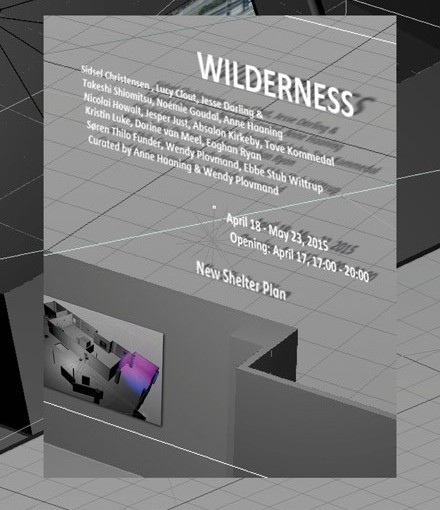
Wilderness

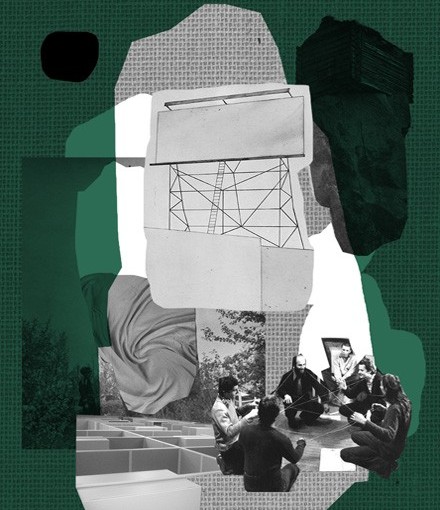
The exhibition Wilderness seeks to reconsider the classic concept of wilderness as received according to 19th century notions of ‘nature’. What is it, exactly, that we search for in our desire for wilderness — where and how do we gain access to the untouched, the mysterious, the unruly, the chaotic and the fantasy of independence in contemporary society?

The idea is to explore Wilderness both by revisiting the natural phenomenon in a nostalgic and romantic sense and by extending the concept to include the contemporary setting of an entropically evolved, human-made world. Aware that Wilderness is a cultural construction, tied to perception of place, system, structure, civilisation and state, we propose various sites for wilderness in a contemporary world – psychological, philosophical, therapeutical, political, social, digital and anarchic sites of wilderness, for example.

The show investigates a contemporary phenomenon of Wilderness that might signify release from the normative and ‘civilized’ – when exploring untamed nature or the troubled unconscious, when transcending consciousness altogether or in interactions with the endless possibilities arising from social networks, notably editing and sharing in a digital context.

Wilderness will also influence the architecture of the exhibition space itself, which will undergo new modifications.

Wendy Plovmand and Anne Haaning both trained as artists in London at Byam Shaw / Central Saint Martins and Goldsmiths University of London respectively. Their collaboration is based on a common ambition to create mutual exchange between the Danish and British art scene and to examine and renew the encounter between art and audience.

The exhibition is kindly supported by: The Danish Art Council, Bikubenfonden, City of Copenhagen, Knud Højgaard Foundation, Tuborg Foundation and Carlsberg.

Growing Silent

Silence, please. This is not an order; obviously. It’s an invitation.

Most often silence is conceived as the antithesis of expression, the antithesis of community, as something that inhibits or completely short-circuits social processes. The holding of tongues, the hushing of mouths – silencing as a crucial weapon of oppression. In this sense silence ultimately equals death as one famous slogan from the aids-activists from Act Up reads. However, silence can’t easily be reduced to such a simple deduction. Silence can hardly be reduced at all, since it is in contrast defined exactly by its unruly and open-ended character.

With Growing Silent we are inviting participants to join us in collective investigations of different forms of social silence. During this short exhibition we will inquire into the political potentials of intended social silences understood both as forms of resistance – deliberate passivity that robs the initiative of the powers that be – and as something that allows for otherwise incommensurable differences to coexist and even fuse in extra-verbal processes of social becoming.

The exhibition is part of an on-going investigation of potential lines of flight in the 21. Century that has been conducted by the Frisk Flugt collective since spring 2014. Growing Silent will bring together a variety of visual artists, writers and academics coming together to perform collaborative research, produce texts and visual material, as well as new experimental forms of collective silence.

Frisk Flugt is a militant research collective revolving around the concept of flight as resistance and praxis of autonomization. Frisk Flugt operates with a fluid and aesthetic approach to the space of critical thought and has published the two zines; Frisk Flugt I · Escape (2014) og Frisk Flugt II · Sabotage (2015).

This exhibition is supported by Statens Kunstfond

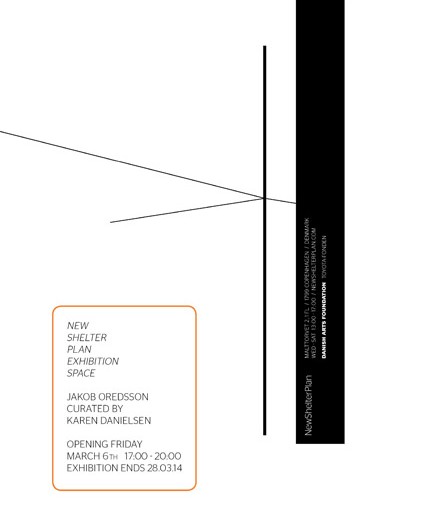
New Shelter Plan Exhibition Space

New Shelter Plan Exhibition Space is experience exhibited.

This exhibition takes its title from the name of the exhibition space itself – New Shelter Plan. As a consequence of the work being defined as the experience within the exhibition space.

The work is mediated through an 18 meters long and 2 meters tall wall of glass. Its dimensions are determined by the length of the room and the height of a human. Through the qualities of transparency, reflection and refraction, the glass activates a dialogue between the room and its visitors. The glass acts as a continuously changing record, a transforming image, exposed with and reflecting activities within the exhibition space. An unfixed and ever developing image, moving with the present.

In this work the defining lines between art and architecture, scenography and choreography, situation and exhibition, are blurred. New Shelter Plan Exhibition Space exists through the encounters it generates.

As you move, you move the work.

New Shelter Plan Exhibition Space is a new work by Jakob Oredsson, curated by Karen Danielsen.

Jakob Oredsson is a Swedish artist currently based in Copenhagen and Stockholm. He has studied art, scenography and architecture at Central Saint Martins College of Art and Design (UK), The Academy for Stage Art (NO), The Cooper Union (US), The Pratt Institute (US) and the Royal Danish Academy of Fine Arts (DK). He primarily works with architectural installations, light- and sound installations and urban interventions. His work has been presented at The Moscow Museum of Modern Art, Momentum Kunsthall, Atelier Hotel Pro Forma, 49B Studios, Factory Studios, The Cooper Union and The Watermill Center, besides public spaces in Copenhagen, Oslo and New York. At the Prague Quadrennial in 2011 he won the Most Promising Talent award.

Karen Danielsen works with exhibition development and production in Copenhagen and abroad, as a freelance curator and producer, and previously with several contemporary art institutions in Copenhagen. With a background in Art History, her work focuses on facilitating the process of developing art projects and creative processes.

This exhibition is supported by TOYOTA-FONDEN.

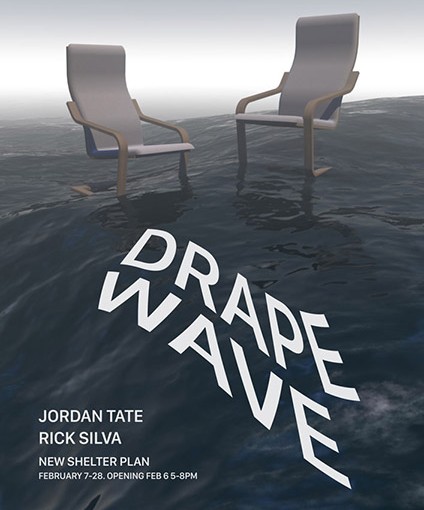
Drape Wave

DRAPE WAVE is a collaborative exhibition by Rick Silva and Jordan Tate that addresses the mutability of the image. Through various surface outputs and rendering processes, the artists explore the malleability of medium and meaning. The works in DRAPE WAVE are fluid, used as entities that obfuscate form while relying on those forms to provide structure. Images gather, fold, drape, and otherwise extend into multiple intersecting dimensions – 2D transferred onto 3D, rendered in 4D, simulated on an ocean wave, seen from a hammock.

Video: walk-through of the exhibition

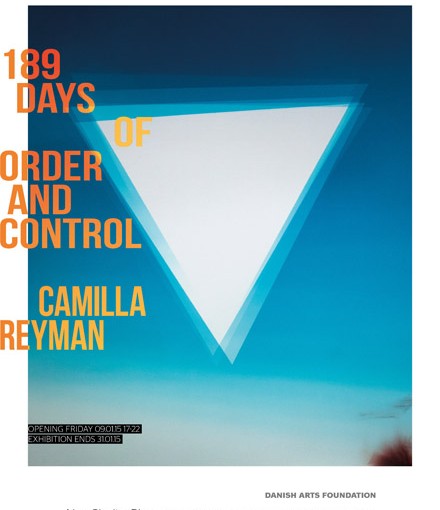
189 Days of Order and Control

I 189 dage har Camilla Reyman bedømt sine egne hverdagsgøremål i et omfattende, men enkelt skema. Hun har sirligt givet hver enkelt handling og tanke en bestemt værdi. Disse data er siden systematisk blevet tildelt en farve eller en geometrisk form.

Det endelige visuelle udtryk skabt ud af de indsamlede data er blevet til en serie på 104 fotogrammer, som alle fungerer som en slags analyse eller fortolkningsmodel over kunstnerens hverdag, tanker og gøremål.

Indsamlingen har Reyman foretaget for at svælge i den potentielt luksuriøse mentale tilstand af at blive befriet for det frie valg og det evindeligt påtrængende ego.

Hun giver os derved et andet bud på kunstproduktion, hvor hun nulstiller det traditionelle kunstner-ego. Kunstneren som det skabende, individuelle, autonome geni holdes på den måde op mod det skemalagte og rutineprægede i et legende eksperiment.

Fotogrammerne fungerer som en form for baggrundstæppe for udstillingens andre værker som er fotos, tegning udført af en bil, og en mekanisk skulptur, der refererer til den kollektive automatisering det postindustrielle samfund har påført os.

At lade komplekst idémateriale tage form af abstrakt geometri er en gammel kunstpraksis, og pionerer indenfor abstrakt maleri og grafik som Hilma af Klint, Emma Kunz, Agnes Martin og Doreen Reid Nakamarra er da også iøjnefaldende referencer til Reymans arbejde, hvor systemer dirigerer det æstetiske udtryk, og kunstneren som ego træder i baggrunden.

Som en ekstra trumf i dekonstruktionen af traditionel kunstnerisk praksis sætter hun endnu en ny leg i gang, hvor hun modarbejder den traditionelle køb/salg praksis, som er grundlaget for hele det kommercielle kunstmarked.

Den omtalte serie værker giver hun nemlig væk mod at modtage en modydelse fra modtageren i form af en tjeneste eller en ting, som Reyman ønsker sig eller har brug for. Hun indgår herved en ny kontrakt med sine beskuere. Og allerede her er bevægelsen mod et andet kunstmarked indledt, idet vi ikke længere kan tale om kunstneren som sælger og samleren som køber.

Udstillingen er støttet af Statens Kunstfond, Københavns Billedkunstudvalg og Fritz Schur Teknik.

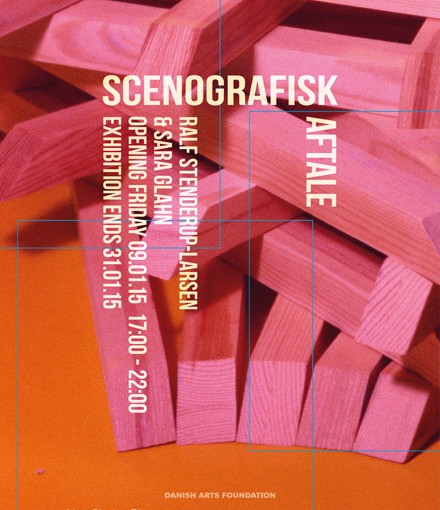
Scenografisk Aftale

“When we talk about the imaginary line, you think about the line between audience and stage. The audience chose to see or to be blind of this line.”

“Scenografisk Aftale” (EN “Scenographic Agreement”) is a show by father and daughter, Ralf Stenderup-Larsen & Sara Glahn. Through the past couple of years they have worked closely together as artists and with “Scenographic Agreement” they present an encounter between photography, sculpture and stage.

The personal commitment is caught on edge, when they through the work and across their generations challenge each other in their perception of how photography and sculpture can intertwine. The show takes its start point in their personal connection, father and daughter, whereof the soundscape in the installation presents the situations and conversations of the artistic collaboration through the past year.

The show “Scenografisk Aftale” balances with the scenic art forms when it creates a stage-like feeling with its combination of photography, sculptures, sound and the spectators possibility of creating their own moments of situations. Here the work balances and is constantly inviting to break the imaginary line between photography and sculpture, stage and installation and through generations.

Sara Glahn received her BFA in 2012 from dutch art academy Gerrit Rietveld Academy, Amsterdam and is currently pursuing a MA in Material Culture at Aarhus University. Ralf Stenderup-Larsen has been a sculptor and visual artist since the 70s and has through a longer period worked as sound and lightmanager and scenographer at different theaters in Copenhagen. In 2010 he started the collaboration with Sara. They have since worked on several projects, latest presented in a solo-show at Galleri Bart, Amsterdam. They share a studio in Copenhagen, which is the center of their collaboration.

————

“Når vi taler om den imaginære linje, tænker du på linjen mellem publikum og scene. Publikum vælger at se eller være blind for denne kant.”

Ralf Stenderup-Larsen og Sara Glahn, far og datter, har gennem en årrække haft et tæt samarbejde som kunstnere og præsenterer med “Scenografisk Aftale” et møde mellem fotografi, skulptur og scene.
Det personlige samarbejde bliver sat på spidsen, når de gennem deres arbejde udfordrer hinanden i deres opfattelser af hvordan fotografi og skulptur kan sammenbringes, på tværs og i spændet af deres generationer. Det hele tager afsæt i den personlige relation, far og datter, hvor lydsiden i udstillingen præsenterer situationer og samtaler af deres kunstneriske samarbejde gennem det sidste år.

Installationen ‘Scenografisk Aftale’ har et mellemværende med de sceniske kunstarter, der med dets fotografier, skulpturer, lyd og beskuerens mulighed for at danne situationer, skaber iscenesættelsen. Deri balancerer værket og byder konstant til at bryde den imaginære linje mellem fotografi og skulptur, scene og installation og mellem generationer.

“Hans kunst er som en opsigtsvækkende slentretur gennem København, hvor vi ved hver port til en gård, byggeplads eller indhug stopper op og kigger, tager et billede og slentrer videre. Denne tur varer på ubestemt tid, den foregår stadig.”

Sara Glahn er uddannet billedkunstner fra det hollandske kunstakademi Gerrit Rietveld Academy (2012) og er nu igang med at tage en kandidat i Materiel Kultur Didaktik ved Aarhus Universitet. Ralf Stenderup-Larsen har været autodidakt billedkunstner siden 1970erne og gennem en årrække arbejdet som lys- og lydmester og scenograf ved adskillige Københavnske teatre, indtil han i 2010 begyndte samarbejdet med Sara. De har siden arbejdet på flere projekter, senest præsenteret på Galleri Bart i Amsterdam. De deler atelier i København, som danner rammen af samarbejde.

The exhibition is kindly supported by Beckers (Frederiksberg)
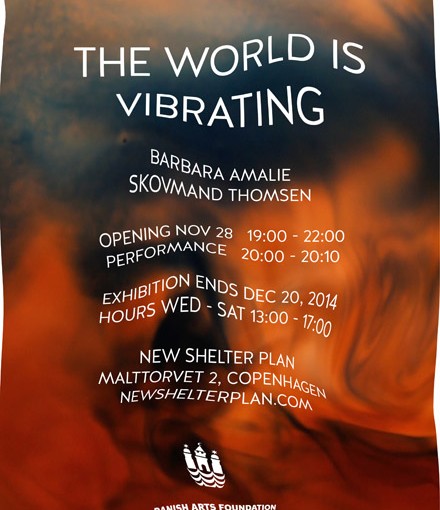
The World is Vibrating

ON COLOUR,

ON MATERIALS, SOUNDS

purple red sparkling blue while lemon yellow streaks and swirling violet purifies HDVideo, clean

bright bright bright ultramarine azure cyan indigo and other blue tones sound while Stine Grøn
sings about the blue horizon out there where longing finds land

marine salt, smell of orange, coconuts in the hands of a Gorilla, and a Blonde. both in uncertain
indefinite nature

dark glistening skin glistening hair stretches her hands out toward us. please accept the fruits
dear Gorilla

gorilla gray-black pitch-black great

coconuts drop down

stuffed grape, glow love fruit, passion juice and pink pitaya’s stracciatella-like pulp with seeds,
who gather for a moon

Indigo and Ruby Red grind against each other

copper sweat leads centuries of love story through

a shape of metal which moves to the beat of magnetism

gritty, metal splinters stings, a gradient between cold and warm, on a scale from north to south
and lemon fumes again

nude the palm twists around

in eternal rotations

Mister Adam Misses Eve

love as long it lasts forever
This exhibition is supported by Danish Arts Foundation, Copenhagen Arts Council and TM Enterprise

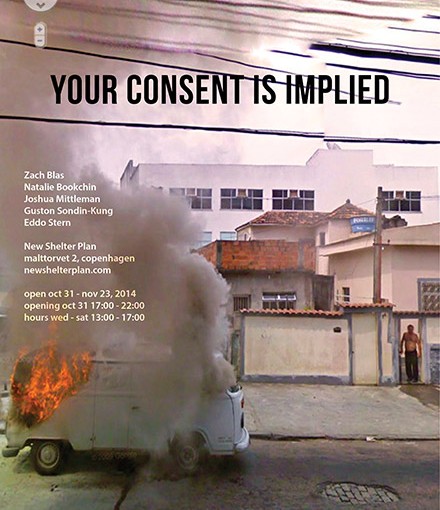
Your Consent is Implied

When you use a phone, walk the streets, drive a car, use the Internet, have a bank account, play games, have a conversation, meet friends, see the doctor, make a purchase, when your heart beats, you have given your consent. The exhibition Your Consent Is Implied examines the impact digital capitalism is having on social relations and identity. The expansion of this form of technology into every facet of life is creating a space where different actors engage in the practice of activism, corporate dominance, illicit activity, warfare, surveillance, personal expression and the building of community. The participating artists utilize their artistic practices in ways that seek to illuminate, question, dismantle and disrupt this ever-expanding topography.

Zach BlasFacial Weaponization Suite protests against biometric facial recognition–and the inequalities these technologies propagate–by making “collective masks” in community-based workshops that are modeled from the aggregated facial data of participants, resulting in amorphous masks that cannot be detected as human faces by biometric facial recognition technologies. The masks are used for public interventions and performances. One mask, the Fag Face Mask, generated from the biometric facial data of many queer men’s faces, is a response to scientific studies that link determining sexual orientation through rapid facial recognition techniques. This along with three other masks and a video will be shown in the exhibition.

Natalie BookchinZorns Lemma2 is a remake of a Hollis Frampton structuralist film Zorns Lemma (1970). It consists of a collection of street signs and other found signage viewed through live feeds of security webcams “photographed” remotely by means of a computer screenshot. Following the structure of Frampton’s film, the signs are arranged alphabetically in one-second intervals. In each subsequent set, one letter of the alphabet is replaced by a webcam image, continuing until all letters are replaced. In place of the all-English signs photographed in Manhattan in Frampton’s film, the signs are from around the globe and appear in multiple languages.

Joshua Mittleman presents six artworks from his ongoing project, Archive of the Forgotten Present that confronts the implications of the reach of technology and what transpires on the frontier of digital innovation. The pieces exhibited deal with the material process of locating, collecting and archiving the activity of entities (both states and criminals) that are intent on maximizing the potential and power that technology affords them regardless of the cost.

Guston Sondin-KungSTUXNET IN DENMARK is a video work that tells the story of the artist’s encounter with an unnamed intelligence officer who has participated in the cyber warfare attack against the Iranian Nuclear power plant in Natanz from a hotel room in Copenhagen. What unfolds through the story is a dialogue about the role of the artist, the fictive side of documents, the trap of paranoia and the unattainable desire to be completely immune to mass surveillance.

Eddo SternBest Flamewar Ever is a 3D computer animation re-creating an online flame war about degrees of expertise within the computer fantasy game Everquest. As the argument between two players escalates, there is a proposal to leave digital space and engage in a physical fight with very specific guidelines.

Notes on the Double Agent

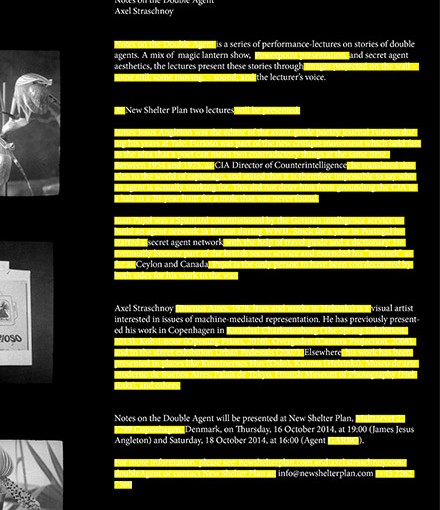
Notes on the Double Agent is a series of performance-lectures on stories of double agents. A mix of magic lantern show, Powerpoint presentation, and secret agent aesthetics, the lectures present these stories through images projected on the wall – some still, some moving, – sound, and the lecturer’s voice.

At New Shelter Plan two lectures will be presented:

James Jesus Angleton was the editor of the avant-garde poetry journal Furioso during his years at Yale. Furioso was part of the new critique movement which held fast to the idea that a poet can mean two contradictory things at the same time.
Between 1954 and 1975, as CIA Director of Counterintelligence, he translated this idea to the world of espionage, and stated that it is therefore impossible to say who an agent is actually working for. This did not deter him from grounding the CIA to a halt in a 20-year hunt for a mole that was never found.

Juan Pujol was a Spaniard commissioned by the German intelligence service to build an agent network in Britain during WWII. Stuck for a year in Portugal he started a secret agent network with the help of travel guide and a dictionary. He eventually became part of the british secret service and extended his “network” as far as Ceylon and Canada. Pujol is the only person to have been con decorated by both sides for his work in the war.

Axel Straschnoy (Buenos Aires, 1978, lives and works in Helsinki) is a visual artist interested in issues of machine-mediated representation. He has previously presented his work in Copenhagen in Kunsthal Charlottenborg (The Spring Exhibition, 2013), Koh-i-noor (Opening Prints, 2010), Overgaden (Camera Projection, 2008), and in the street exhibition Urban Pedestals (2007). Elsewhere, his work has been presented in places like Kunstnernes Hus (Oslo), Kiasma (Helsinki), Museo de arte moderno de Buenos Aires, Palais de Tokyo, Finnish Museum of Photography (Helsinki), and others.

This event is supported by Norden.

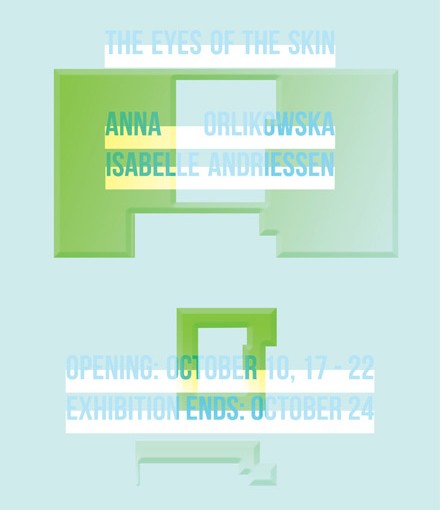
The Eyes of the Skin

The Eyes of the Skin is a site-specific intervention into the architecture of New Shelter Plan gallery. The aim of the project is to evoke a sensory experience that goes beyond hearing and seeing. The eyes of the skin is a dialogue – between two artists, but also a dialogue between the work of these two artists, the architecture of the building, and between light and sound.

The two mediums, light and sound, leave a sensation of immateriality in the first confrontation of the perceiver with the almost empty gallery space. But the presumed emptiness dissipates as the physicality of both light and sound is recognised as omnipresent and thereby evocative of a bodily experience of these forces.

The previous architectonic obstacles are accentuated with site specific interventions, creating a division but also a connection between disparate spaces within the gallery, both spatial and conceptual, wherein an interchange between the known and unknown, the visible and the invisible exists.

Ultimately it is the architecture of the gallery that becomes the main object of the work; a landscape experienced through the senses of the perceiver. The vibrating symbiosis between light and sound invites the perceiver to wander through a continuously changing landscape activated by those mediums.
Isabelle Andriessen is a visual artist born in the Netherlands (1986). She studied at the School of the Arts Institute of Chicago and the Gerrit Rietveld Academie (NL), where she received her BFA in 2013. Currently she is an MFA candidate at Malmö Art Academy (SE). She lives and works in Amsterdam and Malmö. She is a recipient of the Prins Bernhard Cultuurfonds Fellowship. Her work consists sculpture, installation and performance and has been presented in places like Optical Pavilion, Moscow, Unfair, Amsterdam and Mediamatic Amsterdam. Her work has been presented in online art magazines like Metropolis M and Mister Motley. In July 2014 her work has been mentioned in VOGUE Russia. Recently she has been collaborating with the Dutch National Ballet. Her recent work concern the sensory experience examined through light installations and performances.

Anna Orlikowska is a visual artist born in Warsaw and based in Amsterdam and Chicago. She studied at the Gerrit Rietveld Academie in Amsterdam where she received her BFA in 2013. Currently she is an MFA candidate at the School of the Art Institute of Chicago. She is the recipient of Prins Bernhard Cultuurfonds Fellowship as well as New Artist Society Scholarship Award from the School of the Art Institute of Chicago. Her work consists of performances, sound and video installations and has been presented in places like Galeria TAC in Rio de Janeiro (2014), Casa do Povo in Sao Paulo (2013), Holland Festival in Amsterdam (2012) and Sullivan Galleries in Chicago (2011). As a performer she has collaborated with several artists, including New York based artist Andrea Geyer on the piece for the opening of the Stedelijk Museum in Amsterdam, Public Program (2012). In September 2013 her work has been mentioned in ArtReview. Her recent work focuses on site specific installations using sound and performative gesture.